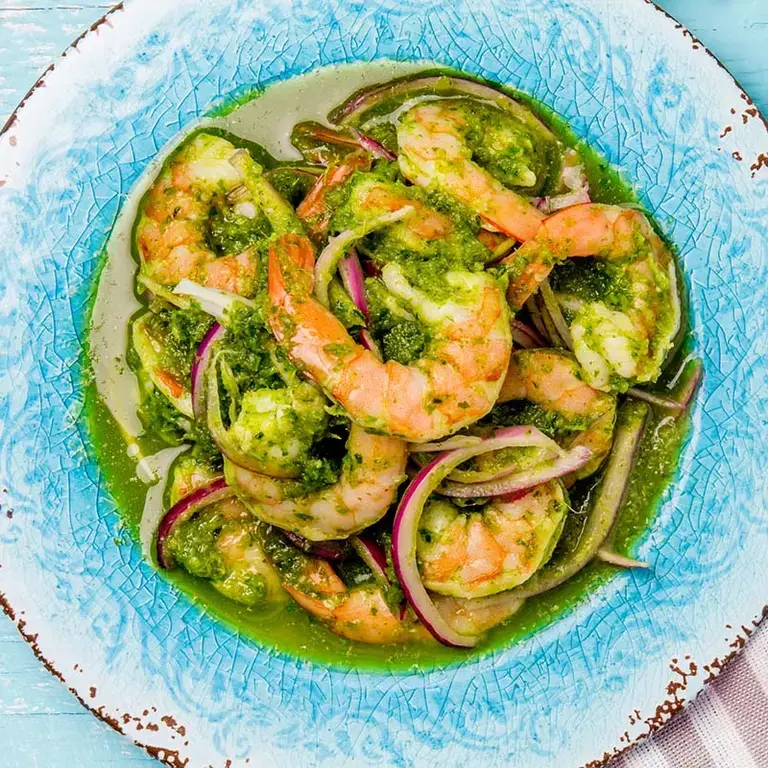

For the best aguachile, select the freshest seafood possible at your local grocery store or seafood counter. To prepare the shrimp, you can simply slice in half lengthwise as recommended in the recipe above to butterfly it and create more surface area for the lime and chiles mixture to coat.
Freshly squeezed lime juice is preferable because it gives the dish its signature bright acidity, unlike bottled alternatives. Similarly, fresh chiles are preferable for an authentic aguachile, giving the plate a clean, grassy heat that can’t always be achieved with dried varieties.
Aguachile is usually assembled shortly before serving, with a shorter marinating time in comparison to ceviche. This helps the dish to retain its delicate mouthfeel with the aguachile blend complementing, rather than dominating, the seafood flavors.
Hold off on adding the garnishes until the very end, as the avocado slices will soften and brown if added ahead of time. The English cucumber and sliced red onion provide a welcome crunch and are worth including for a contrasting texture.
Aguachile vs. Ceviche: The Differences
Aguachile is defined by its chiles-lime liquid with the name breaking down into agua chile, literally meaning chiles water. It’s a Mexican dish associated with the Pacific coast, traditionally made using shrimp. The chiles is central to the dish and it’s served with the seafood often sitting in the liquid chiles-lime mixture.
Ceviche, on the other hand, is associated with Peru and wider Latin American traditions. It’s often made with white fish, alongside other seafood such as shrimp. It relies on the citrus curing to “cook” the seafood, letting the acid alter the ingredients before serving. The dishes do overlap, but they have key distinctions and shouldn’t be considered interchangeable.
Variations (Verde, Rojo, Negro)
There are many variations for aguachiles, changing the core ingredients to create differing styles. Aguachile verde is the classic green version and the most well-known. It’s usually made with fresh green chiles, such as serranos, paired with lime juice, cilantro, and salt. It is often garnished with cucumber and red onion, as in the recipe shared above. It’s bright, fresh, herbaceous, and spicy, and commonly made with shrimp.
Aguachile rojo gets its signature color and name from red chiles. It tends to be fruitier than an aguachile verde, and is made with a variety of seafood including shrimp and scallops. Lastly, the aguachile negro is the most intensely savory variation of the dish. It combines roasted chiles with lime and seasonings, such as soy sauce or Worcestershire sauce, for an umami-rich taste profile. Aguachile negro is particularly good with robust seafood.
The different styles aren’t simply reflections of varying heat levels; rather, their colors refer to the ingredients used in the aguachile liquid, giving each variation a distinct flavor.